Birds Around Us (BArU)
Initiative for bird-friendly cities
Bird Friendly Cities
The rapid urbanization in Indonesia makes the composition of the population change as more people live in cities. The number of the world’s population living in cities is expected to increase, from 50% today to 60% by 2030. At that time, it was estimated that half of Indonesia’s population were city dwellers, so it was necessary to develop a better urban ecosystem. Thus, bringing nature back into the city has a much greater meaning than simply embellishing it.
Since 2011, Burung Indonesia has been encouraging new initiatives for bird conservation in urban areas through the Birds Around Us (BArU), a program focusing on the development of open spaces that is not only green, but also puts ecological principles into consideration. The program aims to increase urban community awareness of the importance of preserving the ecosystem around them.
City and Green Space
Ideally, a city has 30% green area. Green spaces are not only embellishing the city, but also filters out vehicle pollution, reduces noise and absorbs excess water when it rains. As it develops, urbanization often converts green spaces into housing, offices, shopping centers and industrial areas.
Batavia was once famed as “Venice from the East” due to its expansive green area. At that time, Bogor was a lovely suburb; a green and beautiful town with cool climate, at the base of Mount Salak. The Dutch used to call it Buitenzorg, or The Peaceful City.
Rapid urbanization caused Batavia, which transformed into Jakarta today, the most populous city in Indonesia. The surrounding suburbs, including Bogor, are also under great pressure from Jakarta, especially on green spaces that must be converted into settlements.
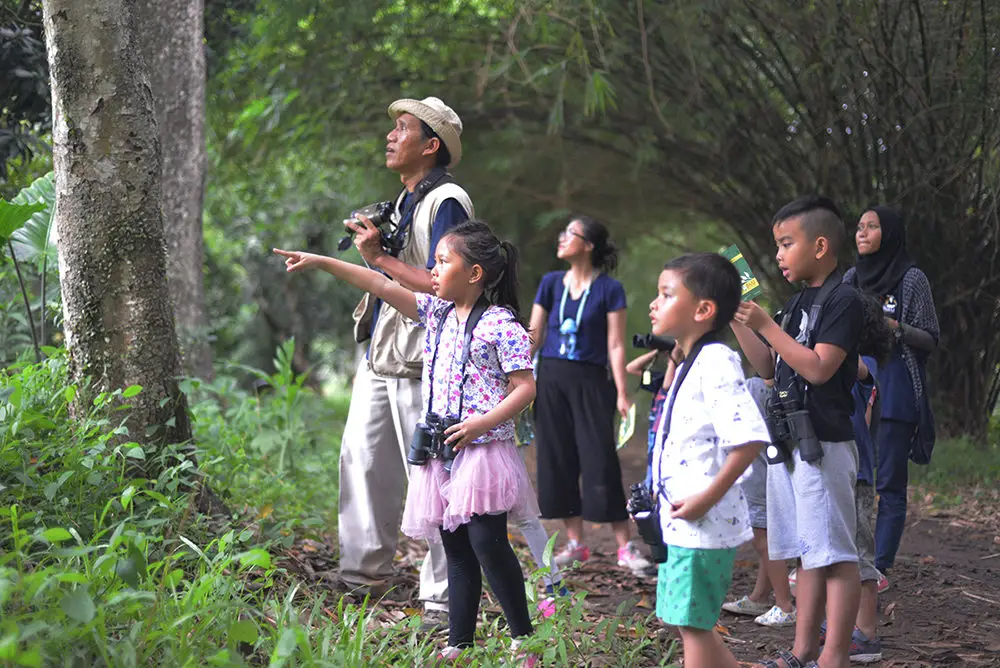
Hutan Kota Tanah Tingal, South Tangerang, Banten
Rapid Decline of Bird Population
Experiencing green spaces dwindle as the building becomes denser, the city birds are pinched between two choices: move to a lusher area or forced to survive in an environment that is no longer suitable for sustaining their lives.
Surviving in areas where trees are scarce is strenuous on birds. For them, trees are a source of life—where they can find food, shelter, and breeding—as are natural sources of water such as rivers and lakes. With their clean water quality, rivers, canals and lakes provide abundant sources of food such as fish and shrimp.
Small green spaces, especially if they are separated in remote locations with no connecting paths, result in isolation for the birds that live in them. Competition for food and breeding is very high in these areas, causing a constant reduction in the number of species and their populations.

Bird-friendly Cities, Providing Habitat for Birds
Birds are a natural indicator of environmental quality. Birds are also attractive and noticeable, making it easy to increase the public’s appreciation of nature and the environment. Admittedly, the chirping of birds gives a natural feel. Bird-friendly cities are the last strongholds for urban birds. With city parks that are more than just green, we can develop bird-friendly cities. The presence of birds and other wildlife, such as butterflies, will be part of the quality of life of the city community.
Besides parks, green corridors are presumed to be a sanctuary for wild birds. Places with extensive greenery, like hotels and hospitals, are potential to be birds’ ‘stepping stones’ from one green block to the others, increasing connectivity between those green areas. In fact, the interconnected greeneries are not only positive for birds but also good for all city dwellers. Residents of cities in tropical countries who walk, cycle, and not in daily use of motorized vehicles need shade from tree canopies.
Green spaces are not only desired by birds, but also enjoyed by humans. Moreover, trees also reduce and neutralize air and noise pollution. In conclusion, bird-friendly cities are inevitably human-friendly too.
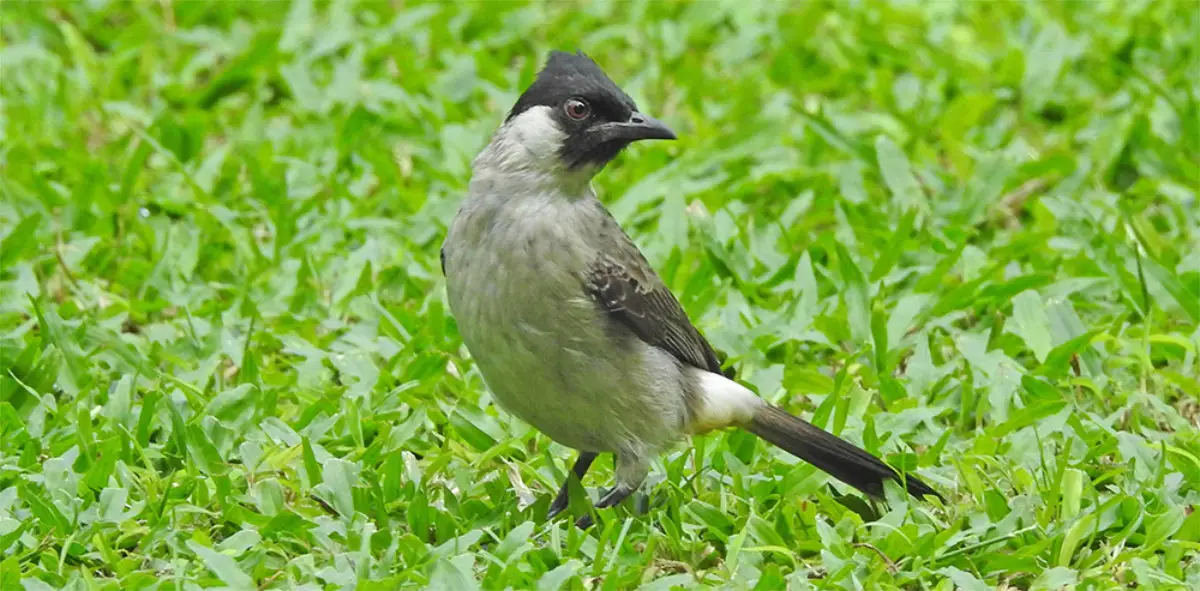
Sooty-headed Bulbul
What We Do?
Aim
To improve the quality of connectedness between birds, humans, and the environment.
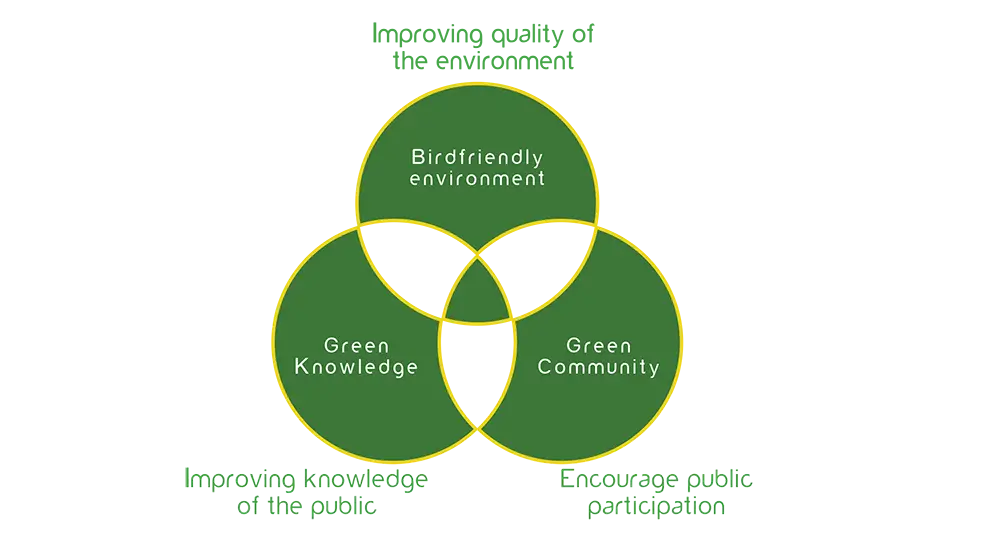
Community knowledge and participation is the key to creating a bird-friendly environment in urban areas.

Target group and strategic environment in the region
In development stage: urban area in Java Island
Environmental education for school-age children
- Collaborate with schools in urban areas
- Conduct environmental learning while playing in open areas such as city parks, urban forests, or other green spaces.
Public awareness about birds and the environment
- Facilitate bird watching activities
- Install information boards on bird diversity and conservation campaigns in green spaces
- Organize regular public events to celebrate the diversity of birds in Indonesia