The State of Indonesia’s Birds 2025
Introduction
Indonesia is a megadiverse country with an incredible wealth of biodiversity. Of the more than 11,000 known bird species worldwide, Indonesia ranks fourth globally, with over 1,800 species recorded. What makes it even more unique is its high level of endemism; over 500 of these species are found only within the Indonesian archipelago and nowhere else on Earth. This diverse array of bird species thrives in complex terrestrial and aquatic ecosystems, a direct reflection of the country’s varied geographical, geological, and ecological conditions.
Despite this, our comprehensive documentation and understanding of the changing status of birds in Indonesia still needs improvement. Threats to bird populations continue to grow, whether from habitat destruction, land-use change, illegal hunting and trade, or the impacts of climate change (BirdLife International, 2025a). That’s why the State of Indonesia’s Birds 2025 report was created—to help fill this information gap. This publication provides a current overview of Indonesia’s bird diversity, including species threat levels, endemism patterns, and distribution, all based on the latest scientific data and contributions from various individuals and stakeholders.
We hope this document will be a valuable resource for researchers, academics, policymakers, conservationists, and the general public, helping them understand the dynamics of Indonesia’s bird diversity. The information presented can also serve as a basis for setting conservation priorities at both national and local levels, supporting more effective protection efforts for species and their habitats. With annual updates and deeper analysis, this publication also helps to identify early population trends, anticipate emerging threats, and strengthen science-based conservation strategies.
Through the State of Indonesia’s Birds 2025, Burung Indonesia is committed to providing accurate and relevant information for everyone who cares about the preservation of birds and their habitats. This publication is part of a collective effort to ensure that Indonesia’s rich bird diversity remains healthy and continues to contribute to ecosystem balance and human well-being for generations to come.
Recent Changes in Bird Diversity
Unlike previous years, data collected throughout 2024 from various sources show that Indonesia’s bird diversity has remained relatively stable. No new species were discovered, either through field observations or recent scientific publications. Naming and re-grouping in bird taxonomy also saw minimal changes during this period.
In earlier years, taxonomic revisions—like species splitting or lumping—were often the main reason for an increase in Indonesia’s total bird species count. However, this year, there was only a minor change, with one species removed from the list. The official number of recorded bird species dropped from 1,836 to 1,835.
This reduction is due to the removal of the Little Swift (Apus affinis) from Indonesia’s bird species list. The species is now considered to no longer have a natural distribution within Indonesia, following refinements in its geographical range and taxonomy. Previously, Apus affinis was often considered conspecific with the House Swift (Apus nipalensis). However, a study by Päckert et al. (2012) showed they are distinct species based on differences in morphology, behavior, and genetic analysis. . That study also placed Apus affinis in a clade with other swift species, such as the White-rumped Swift (Apus caffer), Bates’s Swift (Apus batesi), Horus Swift (Apus horus), and the House Swift (Apus nipalensis). Currently, Apus affinis is known to be distributed across South Asia, East Asia, and Africa. Meanwhile, in Southeast Asia, including Indonesia, the species present is Apus nipalensis (BirdLife International, 2025b).
With this change, the official list of birds in Indonesia now includes 1,835 species, spread across 24 orders and 129 families. These species inhabit various ecosystems, from the open sea to high mountains across the Indonesian archipelago . About 85% (1,559 species) are resident birds found year-round in Indonesia. The remaining 276 species (15%) are migratory birds that visit Indonesia, primarily during the winter in their home regions. Most of them migrate along the East Asian–Australasian Flyway, one of the world’s most important bird migration routes.
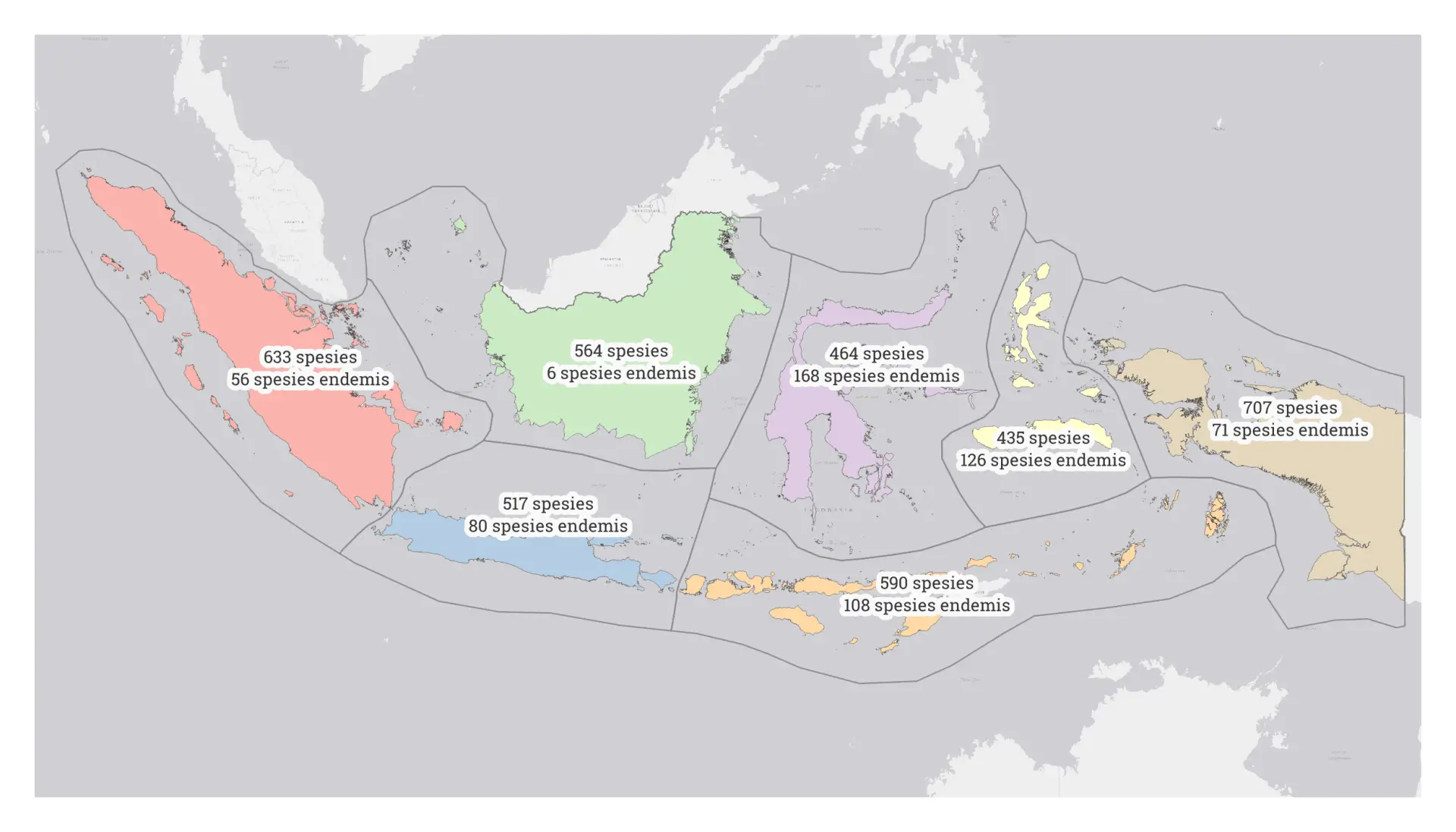
Figure 1. Distribution of Bird Diversity by avifaunal region in Indonesia. The values shown represent the total species and Indonesian endemic species distributed in each avifaunal region.
Endemic Birds of Indonesia
Indonesian endemic birds are defined as species found naturally only within Indonesia’s administrative boundaries and nowhere else in the world. As of the end of 2024, there were no major changes to the national bird diversity, so the number of endemic species remains the same as the previous year. A total of 542 endemic bird species are recorded, spread from the western to the eastern tip of the archipelago (Figure 1). However, their distribution is not uniform. More than half are concentrated in the Wallacea region—a unique biogeographical area that includes Sulawesi, Maluku, and Nusa Tenggara—known as one of the two global biodiversity hotspots located in Indonesia (Myers et al., 2000).
Of the approximately 24 bird orders recorded in Indonesia, 14 make up the endemic bird composition. The three orders with the highest number of endemic species are:
- Passeriformes (songbirds): 326 species
- Columbiformes (doves, pigeons, and cuckoo-dove): 42 species
- Psittaciformes (parrots, such as lorikeets and cockatoos): 41 species
These three groups account for roughly 75% of all Indonesian endemic species. Most of them live in forest habitats, both lowland and montane forests, which underscores the importance of Indonesia’s tropical forests as a primary sanctuary for these endemic bird species. The loss of natural forest cover can have a direct impact on these birds, which have a very limited geographical range.
Over the past five years, 30 new species have been added to the list of Indonesian endemic birds. Most of these are the result of taxonomic “splitting,” where a subspecies previously considered part of a broader species is now recognized as its own distinct species, based on in-depth studies of its morphology, vocalizations, and genetic analysis. Of these new species, 22 are songbirds, followed by four species from the dove-pigeon group, two from the parrot group, and two from the owl group (Strigiformes). A notable example of this taxonomic splitting is the Indian White-eye (Zosterops palpebrosus), which was once thought to be widespread from South Asia to Indonesia. Recent taxonomic studies have split it into three species: Zosterops palpebrosus in South Asia, Zosterops auriventer (Hume’s White-eye) in Sumatra, Kalimantan, and Southeast Asia, and Zosterops melanurus (Sangkar White-eye), which is restricted to Java and Bali—making it an Indonesian endemic species.
Beyond taxonomic revisions, several species have also been described as new to science. In the last five years, 12 new species have been described, showing just how much extraordinary biodiversity Indonesia still holds. Nine of these were from Wallacea. Examples include the Taliabu Grasshopper-warbler (Locustella portenta), Taliabu Leaf-warbler (Phylloscopus emilsalimi), Peleng Leaf-warbler (Phylloscopus suaramerdu), and Taliabu Myzomela (Myzomela wahe), described by Rheindt et al. in 2020. Additionally, two new species were found in Kalimantan by Irham et al. in 2022: the Meratus White-eye (Zosterops meratusensis) and the Meratus Blue-flycatcher (Cyornis kadayangensis). From Papua, the Satin Berrypecker (Melanocharis citreola) was also described by Milá et al. in 2021.
These discoveries show that much of Indonesia’s rich biodiversity has yet to be fully documented. However, along with the high scientific value of these findings comes the concern that species could be lost before their existence is even widely known. Many endemic species that are newly discovered or taxonomically split often inhabit narrow habitats and are vulnerable to disturbance. In this context, the scientific documentation of undescribed or taxonomically unrecognized species becomes even more crucial. Otherwise, these species could suffer population decline or even go extinct in the wild before they ever receive adequate conservation attention.
Bird Threat Status
The threat status of a bird species refers to the classification set by the latest edition of the International Union for Conservation of Nature (IUCN) Red List (IUCN, 2025). This evaluation is updated annually by a network of experts from BirdLife International, allowing for up-to-date information on changes to the threat status of bird species worldwide. In this system, species are sorted into seven categories of extinction risk, from the lowest risk, Least Concern, to the highest, Extinct. A species is considered globally threatened if it falls into the Vulnerable, Endangered, or Critically Endangered categories (Figure 2).
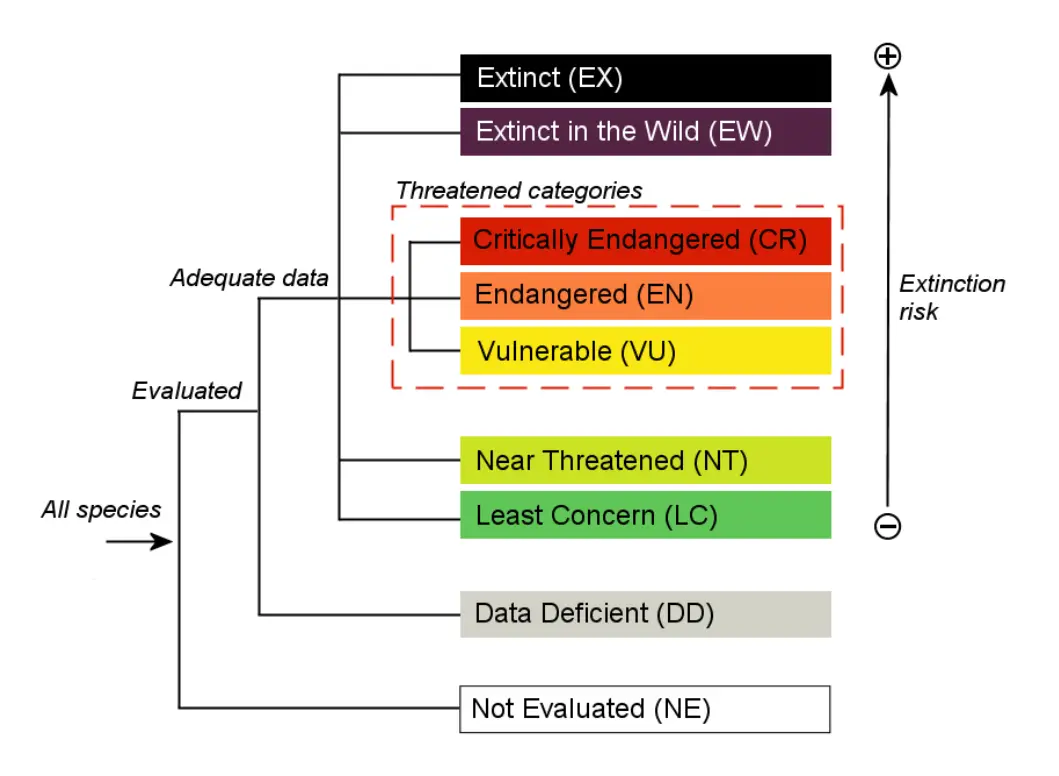
Figure 2. IUCN Red List threat categories.
Based on the latest evaluation, 30 bird species in Indonesia have undergone a change in their threat status. Of this number, 12 species moved into a higher threat category (meaning their conservation status has worsened), while 18 species moved into a lower category (meaning their status has improved). Among the 12 species with an increased threat level, 11 reflect a “genuine change”—a real change in their condition on the ground, such as a drop in population or an increase in threats. On the other hand, of the 18 species whose status improved, only two of those changes were also considered genuine. A “non-genuine change,” which doesn’t reflect an actual change in the wild, can happen due to taxonomic revisions, new data becoming available, or a re-evaluation based on more accurate information (IUCN, 2019).
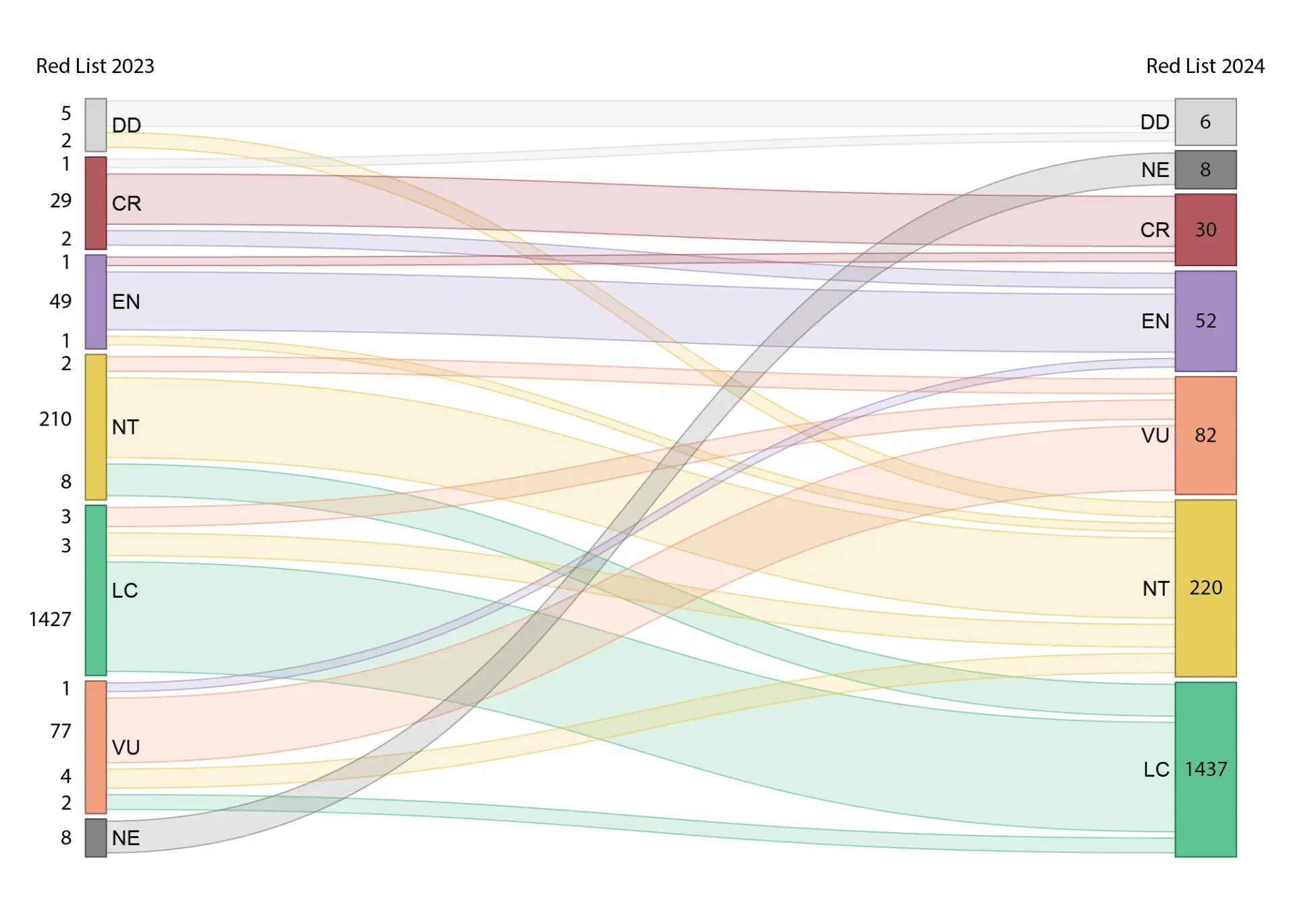
Figure 3. Dynamics of changes in the threat category status of bird species in Indonesia.
The two species whose threat status improved due to a genuine change are the Oriental Darter (Anhinga melanogaster) and the Black-headed Ibis (Threskiornis melanocephalus). Both species were previously listed as Near Threatened since 2004, but in 2024 their status was downgraded to Least Concern. This change reflects a real improvement in their wild populations. For the Oriental Darter, this improvement is due to better protection of wetland habitats, an expansion of its geographical range, successful local conservation programs like the one in Tonle Sap (Cambodia), and increased public awareness leading to less hunting and disturbance. Similarly, for the Black-headed Ibis, its large and growing population, ability to adapt to agricultural habitats and irrigation networks, and protection at key colony sites like Prek Toal, all contributed to its improved status (BirdLife International, 2025b).
Meanwhile, for 16 other bird species, the downgraded threat status was largely due to the availability of new data or information, whether from field surveys or other sources. For instance, the Rufous-fronted Laughingthrush (Garrulax rufifrons), which had been categorized as Critically Endangered (CR) since 2013, has now been re-evaluated after extensive surveys by Burung Indonesia found that the species is still regularly found in 14 locations across six mountainous forest areas in West Java (Marsden et al., 2023). Likewise, the Banggai Scops-owl and the Banggai Fruit-dove, which had been listed as Vulnerable (VU) since 2014, were re-evaluated based on a 2022 study by Burung Indonesia. That study showed both species are still common on Peleng Island, inhabiting various habitat types, including primary and secondary forests, urban forests, and agroforestry systems across all elevations on the island (Jihad et al., 2023). These findings were the main basis for adjusting the threat status of these two species.
Conversely, 11 species saw an increase in their threat category, reflecting population declines in the wild (Table 1). A significant example is the White-winged Duck (Asarcornis scutulata), a member of the Anatidae family, which is now categorized as Critically Endangered due to a very rapid population decline. Major threats to this species include the conversion of lowland swamp forests into plantations, habitat degradation from poor forest management, illegal hunting, and egg collection. Population fragmentation has further worsened its conservation status. In Indonesia, the White-winged Duck is now locally extinct in most of its range and only survives in a few areas in Lampung and Riau, such as Way Kambas National Park and Kampar Peninsula (Ahmed et al., 2023; BirdLife International, 2025b).
Table 1. List of bird species with changes in threat category based on the 2024 IUCN Red List.
| No. | Nama Lokal | Nama Ilmiah | RL 2023 | RL 2024 |
| Downlisted (Genuine reason) | ||||
| 1 | Ibis cucuk-besi | Threskiornis melanocephalus | NT | LC |
| 2 | Pecuk-ular asia | Anhinga melanogaster | NT | LC |
| Downlisted (Non-genuine reason) | ||||
| 3 | Walik banggai | Ramphiculus subgularis | VU | NT |
| 4 | Trinil ekor-kelabu | Tringa brevipes | NT | LC |
| 5 | Gemak sumba | Turnix everetti | VU | LC |
| 6 | Serak taliabu | Tyto nigrobrunnea | VU | NT |
| 7 | Celepuk banggai | Otus mendeni | VU | NT |
| 8 | Elang flores | Nisaetus floris | CR | EN |
| 9 | Pelatuk punggung-emas | Chrysocolaptes strictus | VU | NT |
| 10 | Perkici buru | Charmosyna toxopei | CR | DD |
| 11 | Sempur-hujan jawa | Eurylaimus javanicus | NT | LC |
| 12 | Gagak flores | Corvus florensis | EN | NT |
| 13 | Gagak halmahera | Corvus validus | NT | LC |
| 14 | Opior timor | Heleia muelleri | NT | LC |
| 15 | Ciung-air kangean | Mixornis prillwitzi | VU | LC |
| 16 | Poksai kuda | Garrulax rufifrons | CR | EN |
| 17 | Ciung-batu sayap-coklat | Myophonus castaneus | NT | LC |
| 18 | Sikatan timor | Ficedula timorensis | NT | LC |
| Uplisted (Genuine reason) | ||||
| 19 | Mentok rimba | Asarcornis scutulata | EN | CR |
| 20 | Cerek besar* | Pluvialis squatarola | LC | VU |
| 21 | Trinil pembalik batu* | Arenaria interpres | LC | NT |
| 22 | Kedidi paruh-lebar* | Calidris falcinellus | LC | VU |
| 23 | Kedidi golgol* | Calidris ferruginea | NT | VU |
| 24 | Dunlin* | Calidris alpina | LC | NT |
| 25 | Kedidi dada-jingga* | Calidris subruficollis | NT | VU |
| 26 | Trinil-lumpur paruh-panjang* | Limnodromus scolopaceus | LC | NT |
| 27 | Trinil kaki-kuning* | Tringa flavipes | LC | VU |
| 28 | Kakatua maluku | Cacatua moluccensis | VU | EN |
| Uplisted (Non-genuine reason) | ||||
| 29 | Elang-alap bahu-coklat | Erythrotriorchis buergersi | DD | NT |
| 30 | Pelanduk kalimantan** | Malacocincla perspicillata | DD | NT |
*Legend: RL: Red List; *: Shorebird; *: Source: Akbar et al., 2021
Besides the White-winged Duck, eight species of shorebirds have also moved into a higher threat category. These are migratory birds that depend on the network of wetlands along the East Asian–Australasian Flyway. Their increased status is largely due to the loss of key habitats from coastal reclamation, large-scale land conversion, and human disturbance during their migration and overwintering¹ phases. Climate change also adds pressure to these critical habitats. The population decline of these shorebirds is consistently documented through long-term monitoring, and this data provides the scientific basis for their increased threat status (BirdLife International, 2025b).
This trend of increasing threat statuses is a critical signal about the state of our changing ecosystems. To aggregate this information, the Red List Index (RLI) was developed. This index measures the change in species extinction risk over time. A value of one (1) means all species are in the low-risk category, while zero (0) means all are extinct. The RLI for bird species in Indonesia shows a declining trend since monitoring began, although the rate of decline has slowed slightly since 2016 (Figure 4). However, the trend still shows that pressure on bird populations continues and has not been fully addressed.
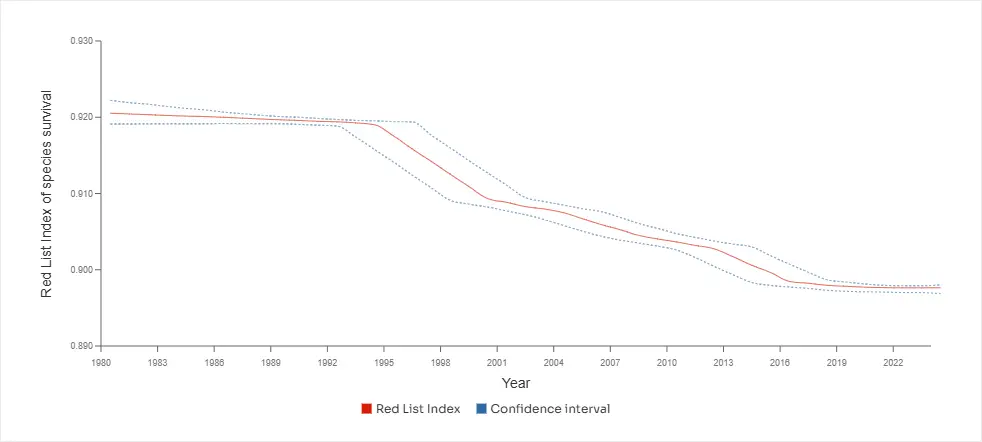
Figure 4. Red List Index (RLI) of bird species in Indonesia (Source: BirdLife International, 2025a)
¹Overwintering refers to locations where birds spend the winter, typically in tropical or subtropical regions, after migrating from their breeding grounds at higher latitudes.
This situation highlights the importance of increasing the scope and effectiveness of conservation efforts. Future strategies need to be more integrated, evidence-based, and involve multiple parties, including local communities. Long-term monitoring, protecting important habitats, controlling direct threats, promoting sustainable use (such as special interest tourism/bird tours/biodiversity-based economic models), mainstreaming biodiversity into regional policies and private sector programs, and cross-country conservation cooperation are all crucial, especially for migratory species. Only by strengthening collaboration and adopting an ecosystem-based approach can we reverse the declining trend of the Red List Index and improve the conservation status of birds in Indonesia.
Conclusion
The State of Indonesia’s Birds 2025 provides a current snapshot of the dynamics of bird diversity and threats in Indonesia. Some species show an increased risk of extinction due to pressure on their habitats, hunting, and other factors. However, there are also species whose status has improved thanks to consistent protection and monitoring, proving that conservation interventions can bring about positive results.
Through analyses like the RLI, this publication highlights the importance of long-term monitoring and early response to emerging threats. The information presented is meant to serve as a basis for formulating policies, setting conservation priorities, and encouraging cross-sector collaboration to protect birds and their habitats.
To supplement this report, a downloadable list of Indonesian bird species is available, serving as an important reference for researchers, policymakers, conservationists, and the general public. It is our hope that this document will strengthen our collective efforts to preserve Indonesia’s birds for future generations.
List of Bird Species in Indonesia
You can download the complete list of bird species in Indonesia via the QR code or the following link: https://forms.gle/pooVsAxgLGem677XA

Suggested Citation:
Junaid, A. R. (2025). Status Burung di Indonesia 2025. Burung Indonesia. Retrieved from https://merpati.asia/informasi-burung/status-burung-di-indonesia-2025/ on [dd-mm-yyyy].
Referensi
Ahmed, A., Barman, R., Samir, S. K., Choudhury, A. U., Yadava, M. K., Young, G., Stanley, P. M. R., Kaul, R., & Menon, V. (2023). Call of the Divine Duck: Conservation Strategy and Action Plan for the White Winged Duck in Assam. Wildlife Trust of India.
Akbar, P. G., Nugroho, T. W., Suranto, M., Fauzan, M. R., Ferdiansyah, D., Trisiyanto, J. S., & Yong, D. L. (2021). No longer an enigma: rediscovery of Black-browed Babbler Malacocincla perspicillata in Kalimantan, Indonesia. Journal of Asian Ornithology, 37 (November), 1–5. https://www.
BirdLife International. (2025a). Country factsheet: Indonesia. https://datazone.merpati.asia/country/factsheet/indonesia
BirdLife International. (2025b). IUCN Red List for birds. https://datazone.merpati.asia
Irham, M., Haryoko, T., Shakya, S. B., Mitchell, S. L., Burner, R. C., Bocos, C., Eaton, J. A., Rheindt, F. E., Suparno, S., Sheldon, F. H., & Prawiradilaga, D. M. (2022). Description of two new bird species from the Meratus Mountains of southeast Borneo, Indonesia. Journal of Ornithology. https://doi.org/10.1007/s10336-021-01937-2
IUCN. (2019). Guidelines for Using the IUCN Red List Categories and Criteria (Version 14). IUCN Standards and Petitions Committee. http://www.iucnredlist.org/documents/RedListGuidelines.pdf
IUCN. (2025). The IUCN Red List of Threatened Species. Version 2025-1. https://www.iucnredlist.org
Jihad, Saputra, D., Aruna, W., & Reza, M. (2023). Comprehensive Biodiversity Survey of Peling Island. Burung Indonesia. (report available upon request).
Marsden, S. J., Junaid, A. R., Kaprawi, F., Muladi, F., Aprianto, G. C., van Balen, S. (Bas), Saryanthi, R., Collar, N. J., & Devenish, C. (2023). Distribution and abundance of threatened and heavily traded birds in the mountains of western Java. Bird Conservation International, 33, e63. https://doi.org/10.1017/S095927092300014X
Milá, B., Bruxaux, J., Friis, G., Sam, K., Ashari, H., & Thébaud, C. (2021). A new, undescribed species of Melanocharis berrypecker from western New Guinea and the evolutionary history of the family Melanocharitidae. Ibis, 163 (4), 1310–1329. https://doi.org/10.1111/ibi.12981
Myers, N., Mittermeier, R. A., Mittermeier, C. G., Fonseca, G. A. B. da, & Kent, J. (2000). Biodiversity hotspots for conservation priorities. Nature, 403 (February), 853–858.
Päckert, M., Martens, J., Wink, M., Feigl, A., & Tietze, D. T. (2012). Molecular phylogeny of Old World swifts (Aves: Apodiformes, Apodidae, Apus and Tachymarptis) based on mitochondrial and nuclear markers. Molecular Phylogenetics and Evolution, 63 (3), 606–616. https://doi.org/10.1016/j.ympev.2012.02.002